

ICAA Edinburgh Drawing Tour 2022
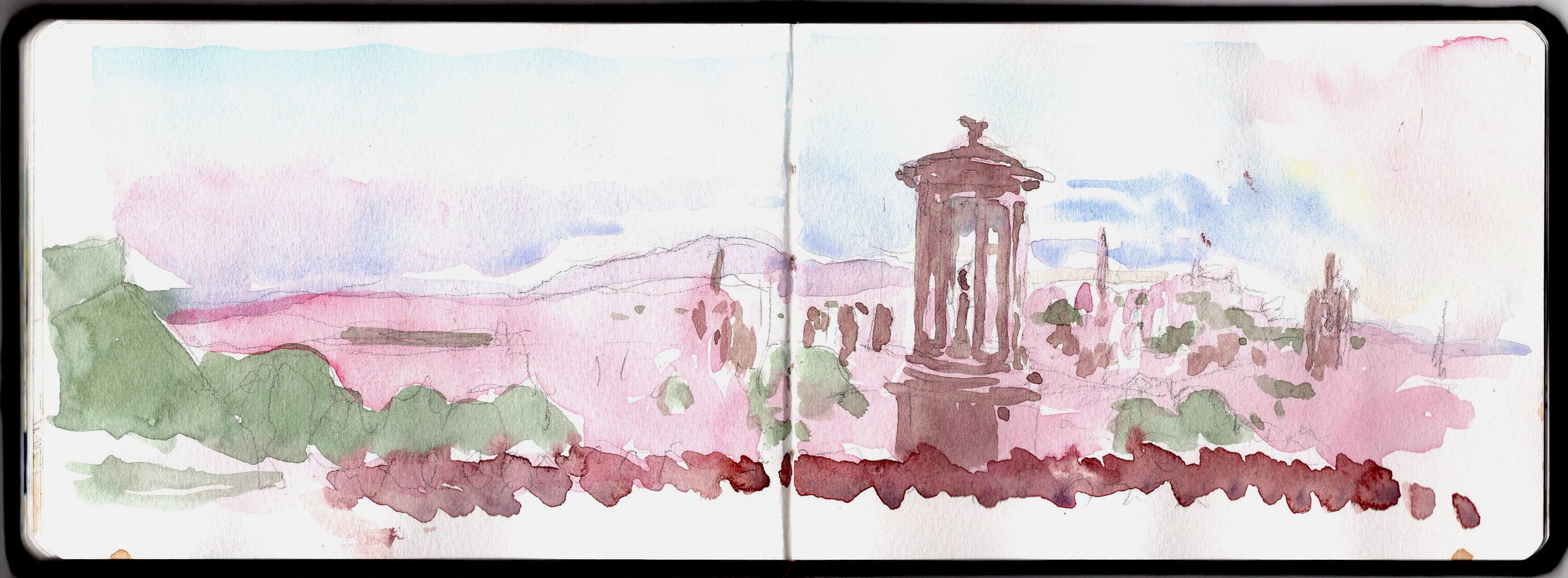
Dugald Stewart Monument, Calton Hill, watercolor 2022
After two incredible experiences with the ICAA Drawing Tours in Rome and Paris, I decided to join the Edinburgh Drawing Tour as a culmination of drawing studies abroad. The tour was designed and led by George Samaurez Smith, one of the leading classical architects practicing in England (who also co-taught the Rome Drawing Tour). George’s architectural education began at the University of Edinburgh, so he is an incredible resource of classical architecture in Scotland.
Our group met on a Saturday evening for introductions and a tour through the New Town. George narrated as we walked by St. Andrew’s Square, Queen Street, Hanover Street, George Street, Frederick Street, Rose Street, Charlotte Square, and the Royal Physician’s College, pictured below.
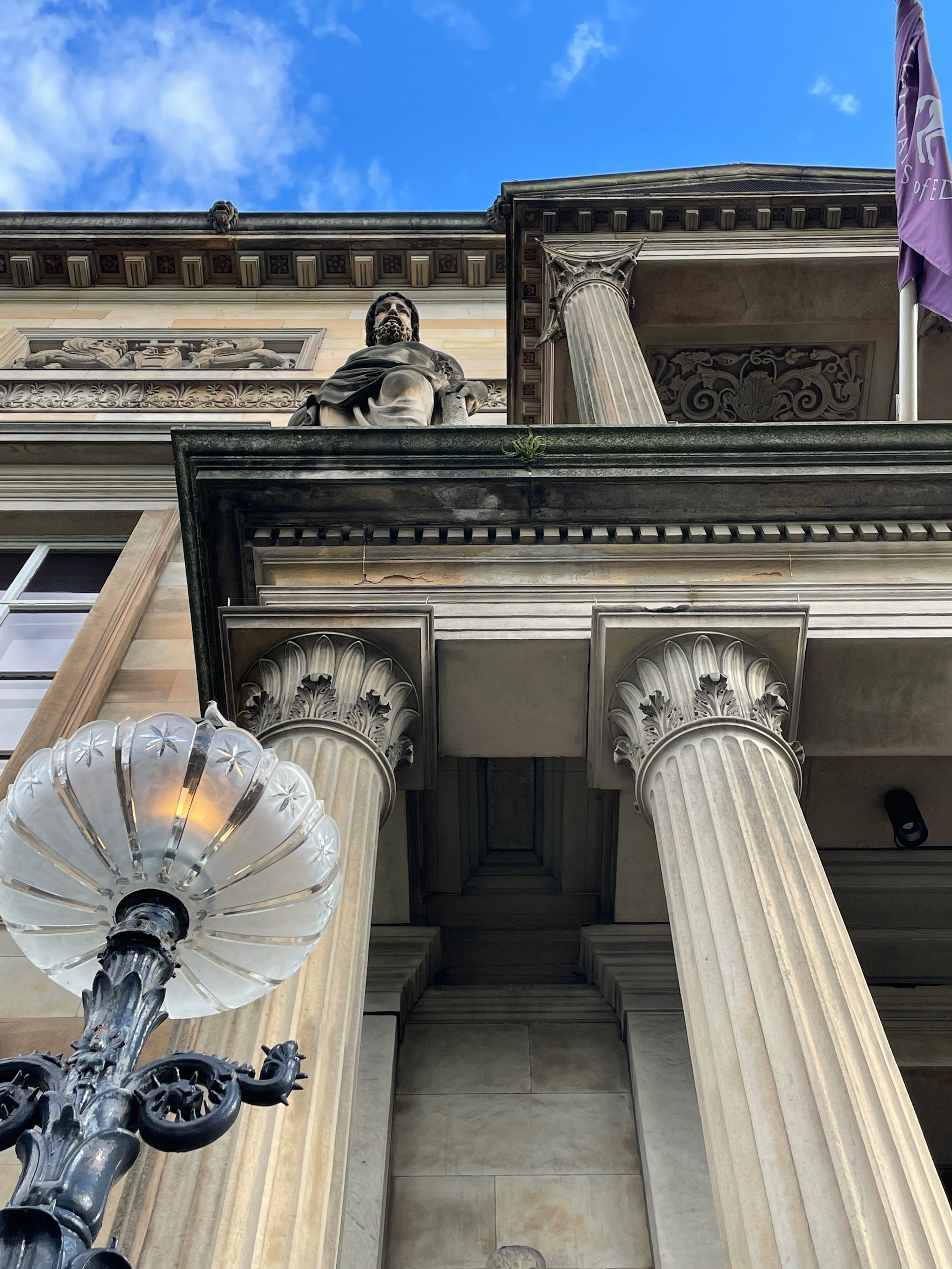
Royal Physician’s College, Edinburgh New Town, 2022
Day 1: Calton Hill / Calton Burial Ground
We begin the Drawing Tour on Calton Hill, the Acropolis of the ‘Athens of the North’. In the early 19th century, this was the site chosen for monuments of national importance and these were mainly based on Ancient Greek precedents. The most prominent of these was the National Monument, intended to commemorate the Napoleonic Wars and modelled on the Parthenon. Funds ran out after only twelve columns had been built and the monument has remained unfinished, leaving it with a more romantic appearance resembling a ruin.
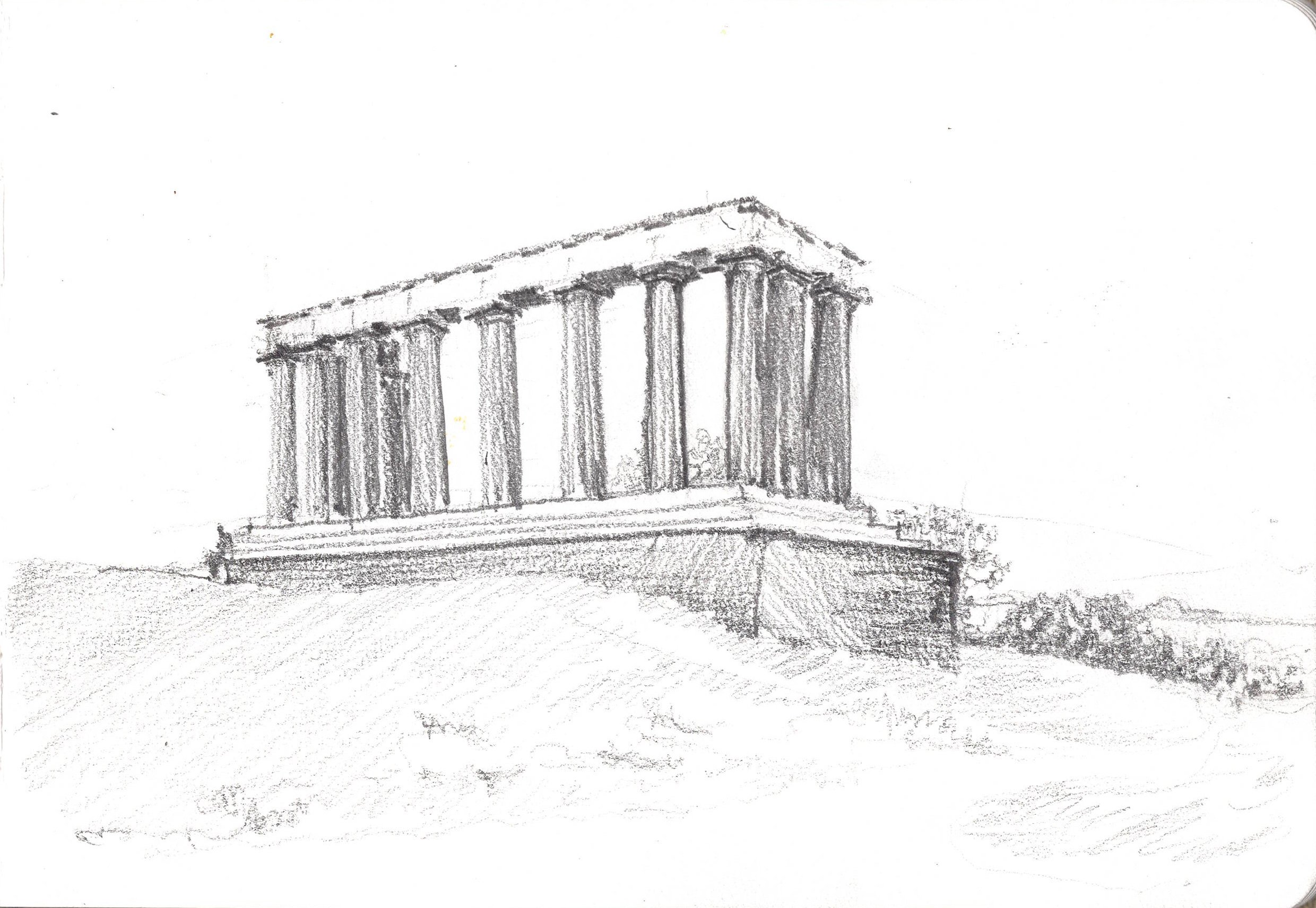
National Monument, pencil sketch 2022
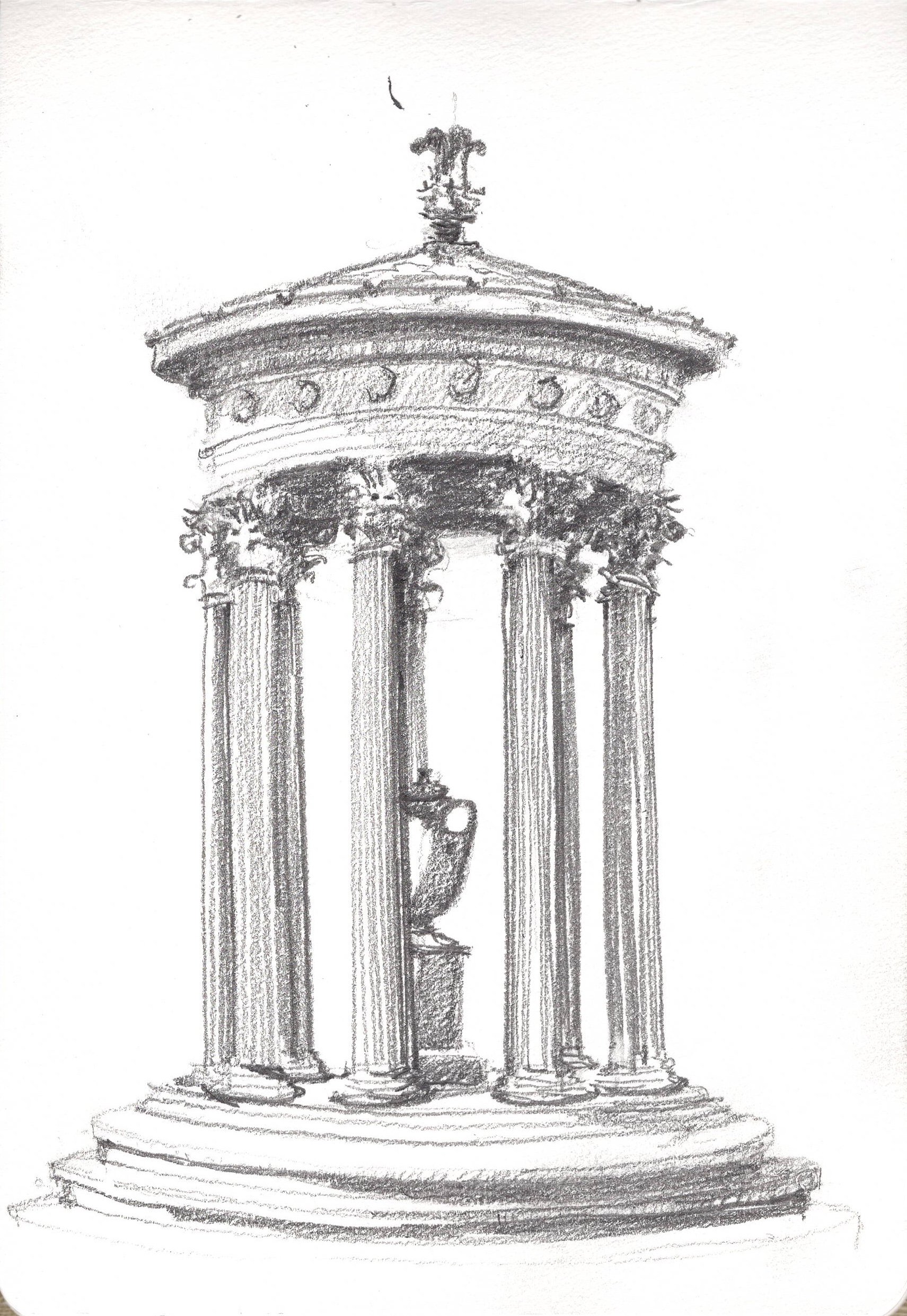
Dugald Stewart Monument, Calton Hill
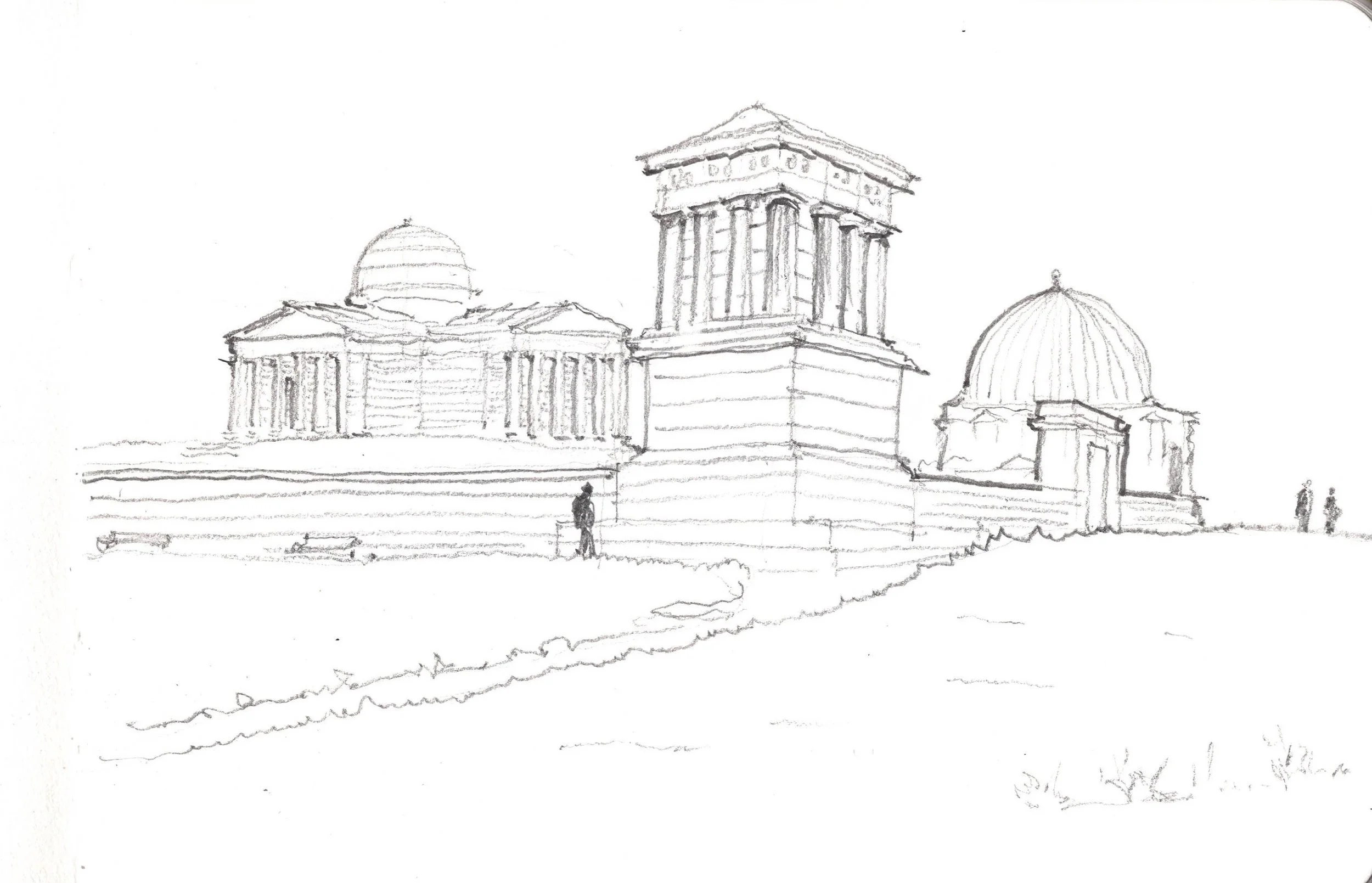
Calton Hill monuments, pencil sketch 2022
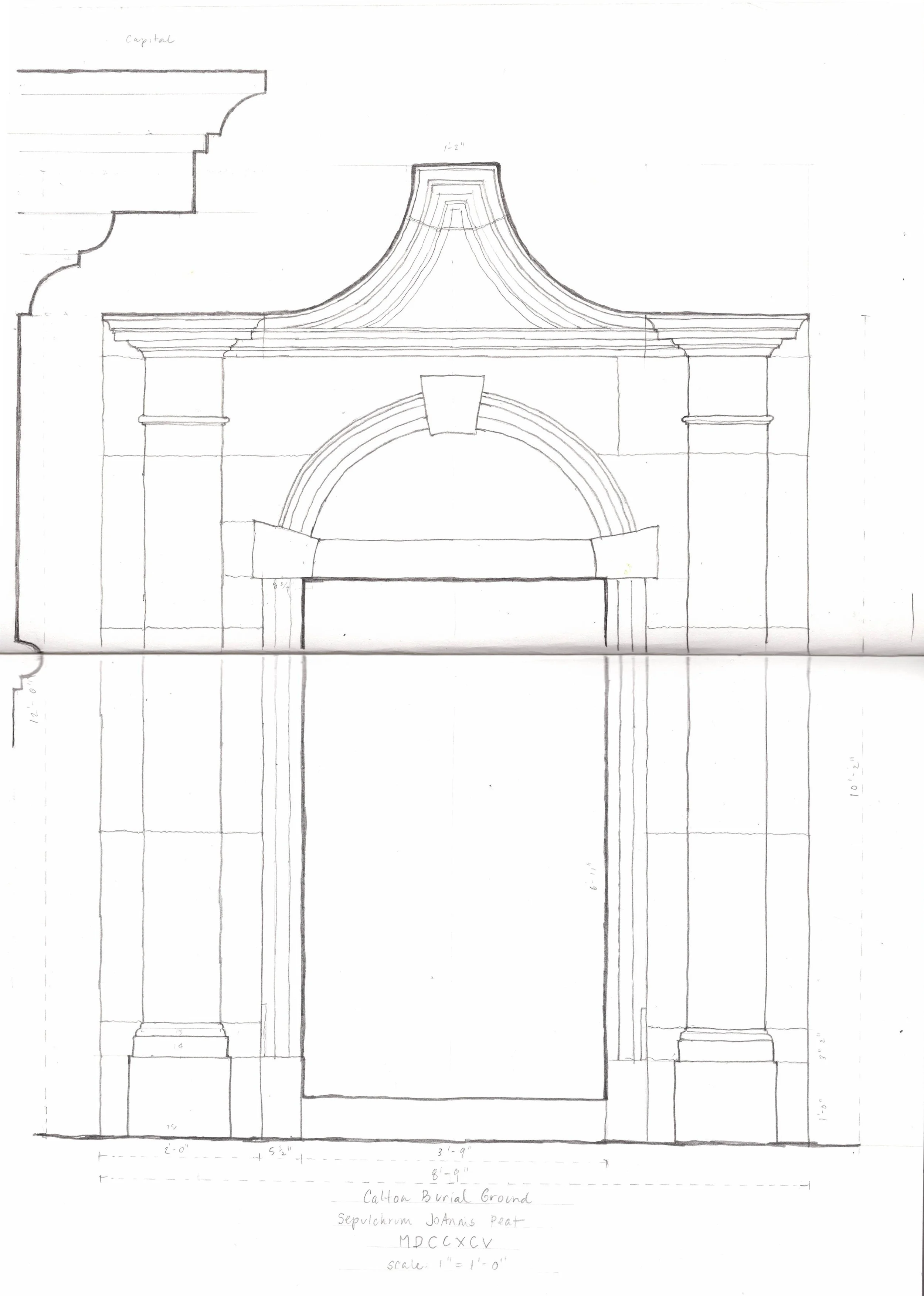
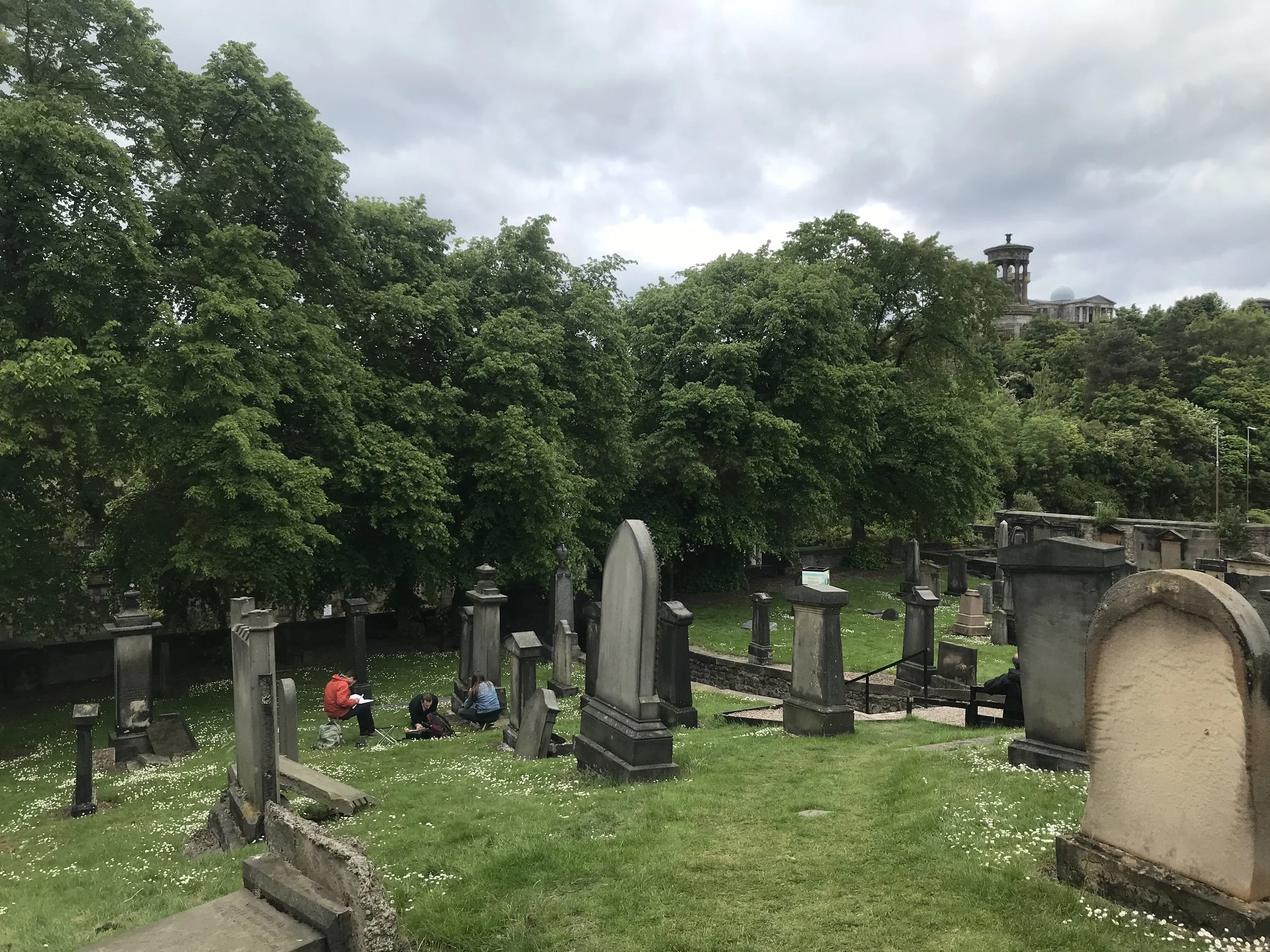
Sunday afternoon was spent at Calton Burial Ground to measure funerary monuments. George shared his measured-drawing sketchbook as an example of how to compose the page and draw straight lines freehand. His latest volume ‘Sketchbooks’ shows incredible artistry of measured drawing and draftsmanship.
Day 2 / Day 4: Signet / Playfair Libraries
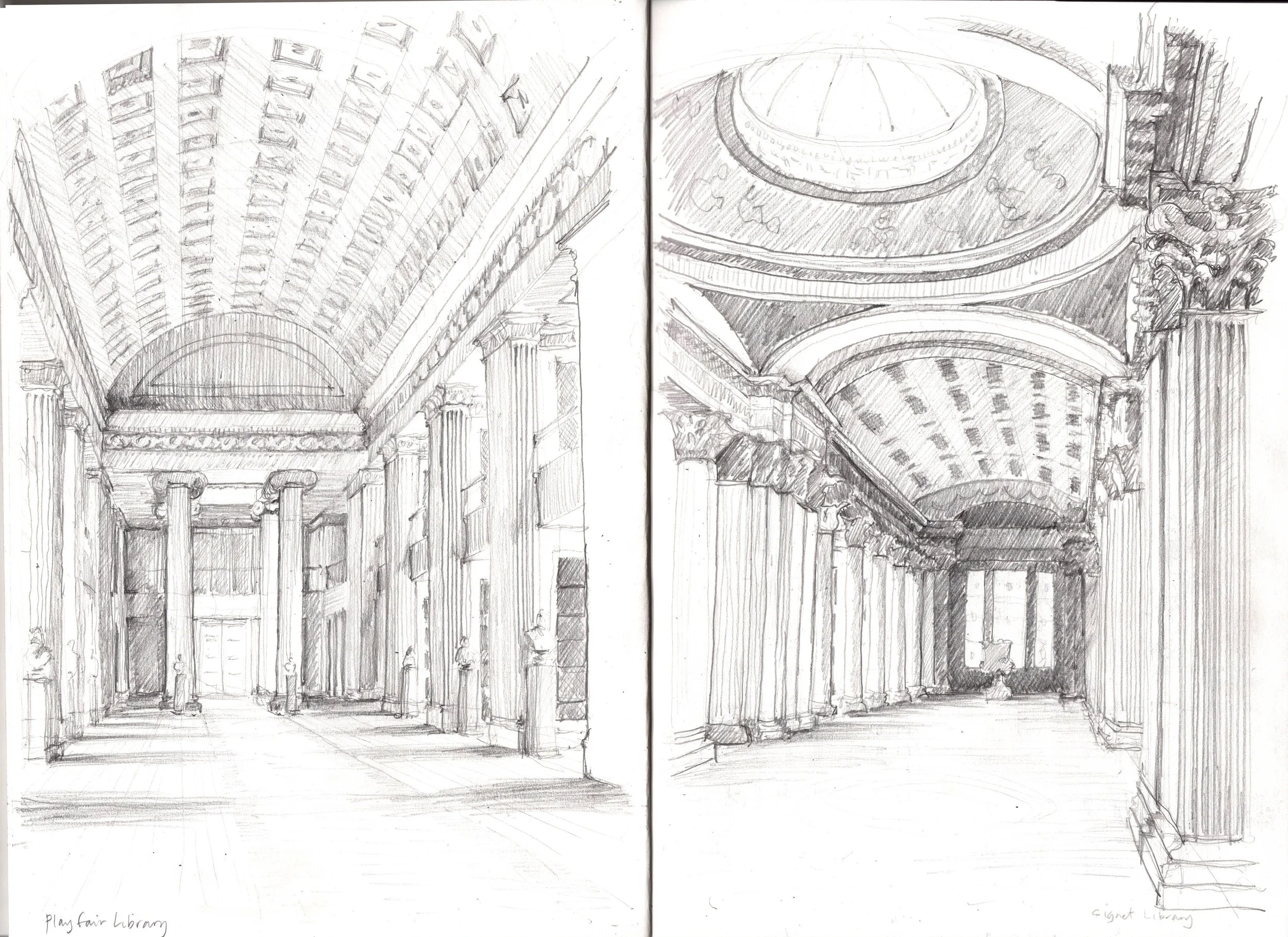
On separate mornings, we had special permission to see two of Edinburgh’s grandest classical interiors. The Playfair Library (left below), is one of the masterpieces of the architect William Playfair and one of Edinburgh’s greatest neo-classical interiors. The Signet Library (right below) was designed by the architect William Stark and completed in 1822. We drew one-point perspectives in pencil, composing the drawings on both sides of an open sketchbook to make a fine compositional pair. Capturing the Corinthian order and central dome of the Signet Library was particularly challenging.
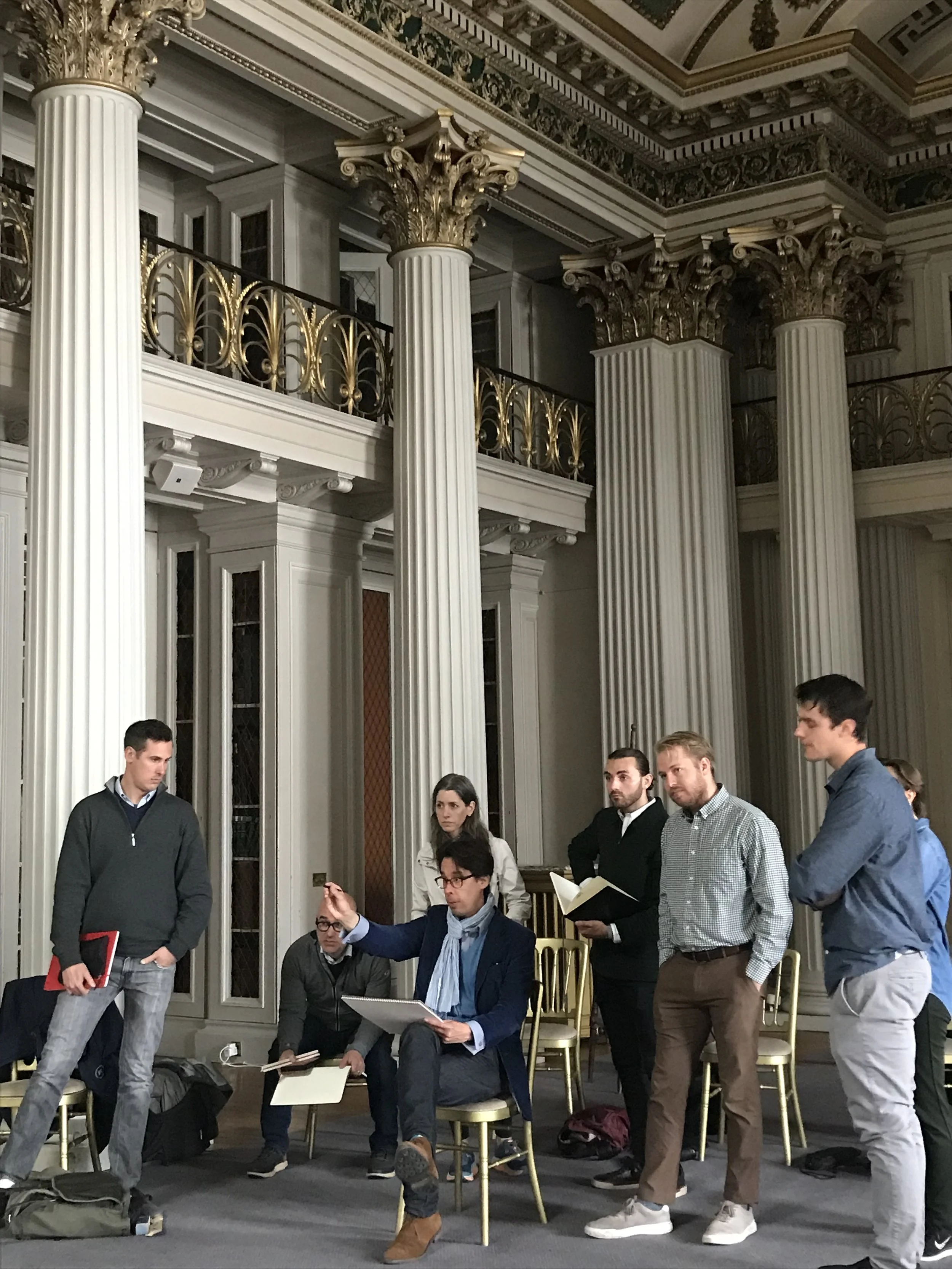
Learning the art of the constructed perspective with George Samaurez Smith
Day 3: Ironwork at Circus and Moray Place / Old College
The focus on Day three was measured drawings, and our first stop was Moray Estate in New Town. The estate has a memorable sequence of urban space beginning with Randolph Crescent, opening into Ainslie Crescent and then to the twelve-sided Moray Place.
We took measurements and made sketches of the lampposts and railings along Circus Place and Moray Place, which then became composed drawings in our sketchbooks.
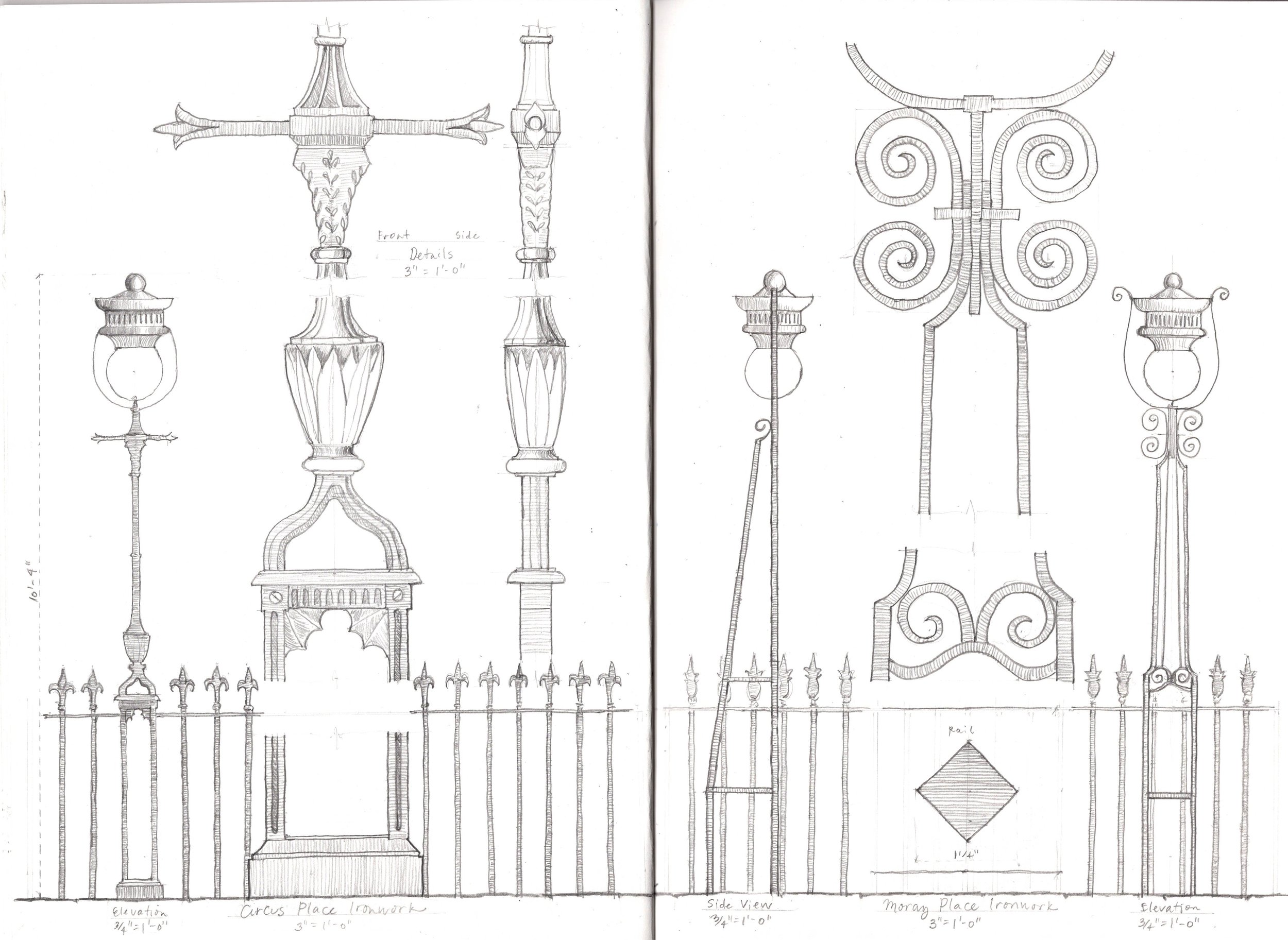
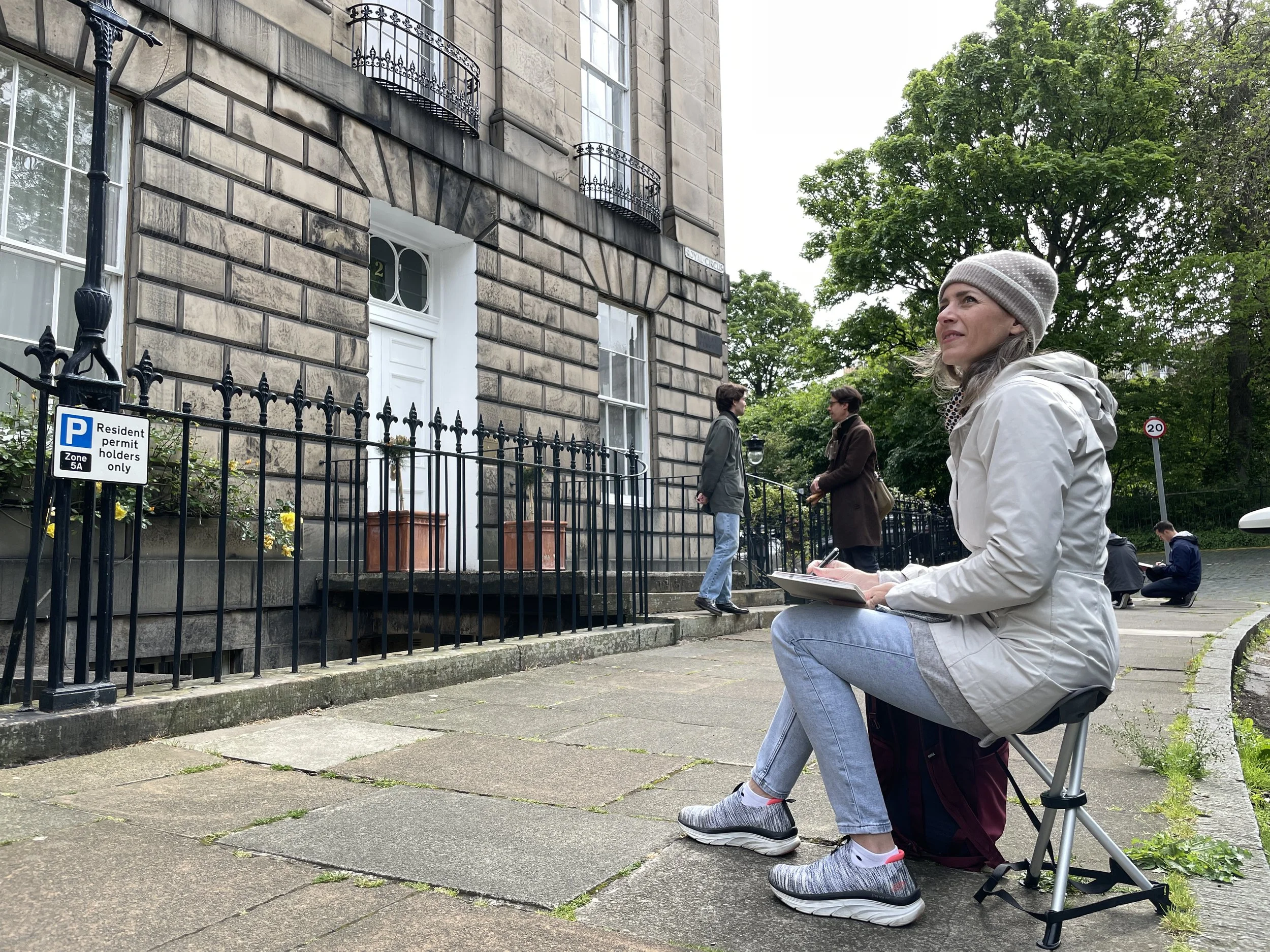
making observations of Circus Place lampposts on a chilly day in Edinburgh, 2022
On a walk through New Town we stopped outside St. Stephen’s Church in St. Vincent Place. This grand building designed by William Playfair is notable for its gargantuan scrolls flanking the entrance.
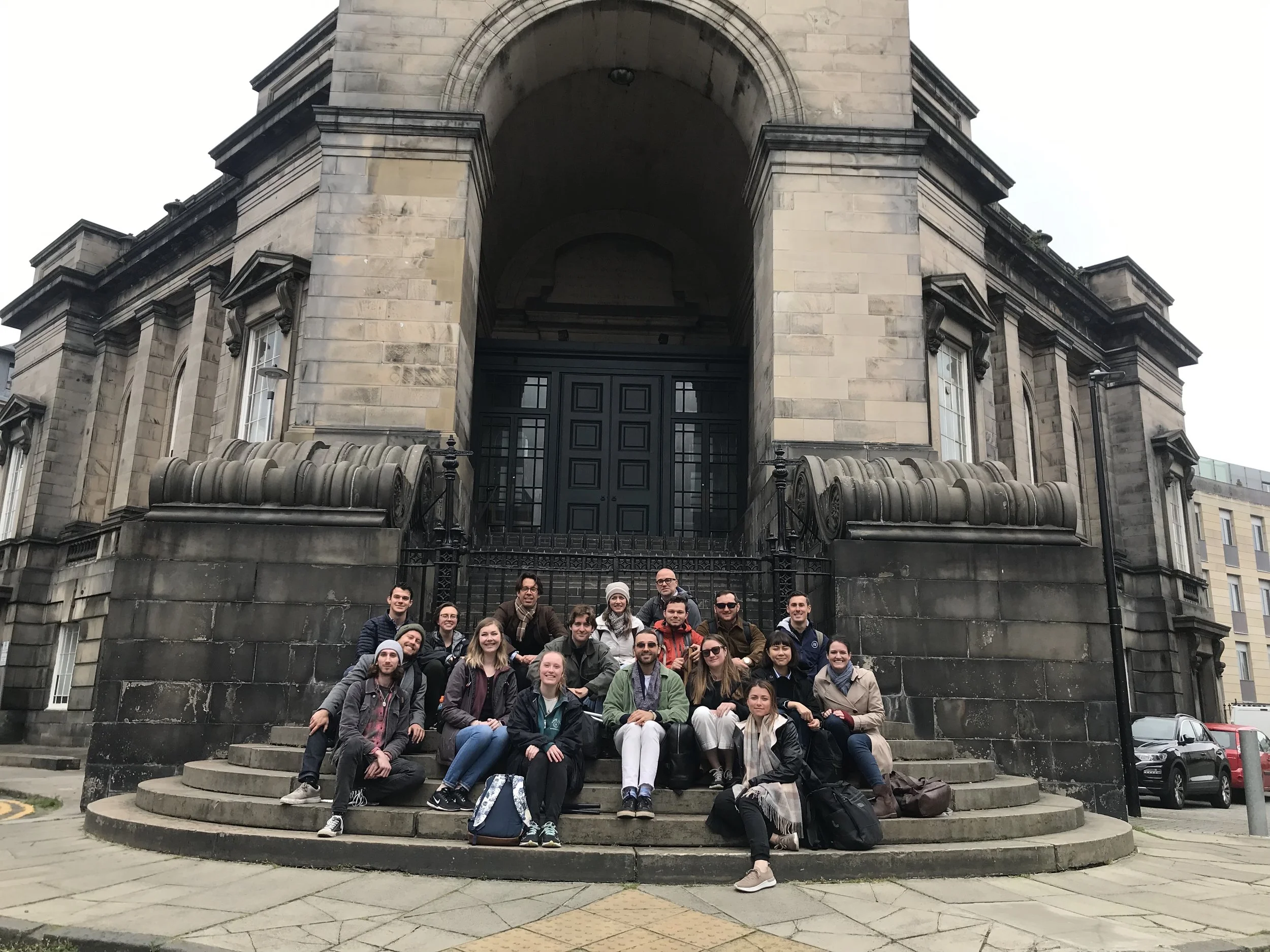
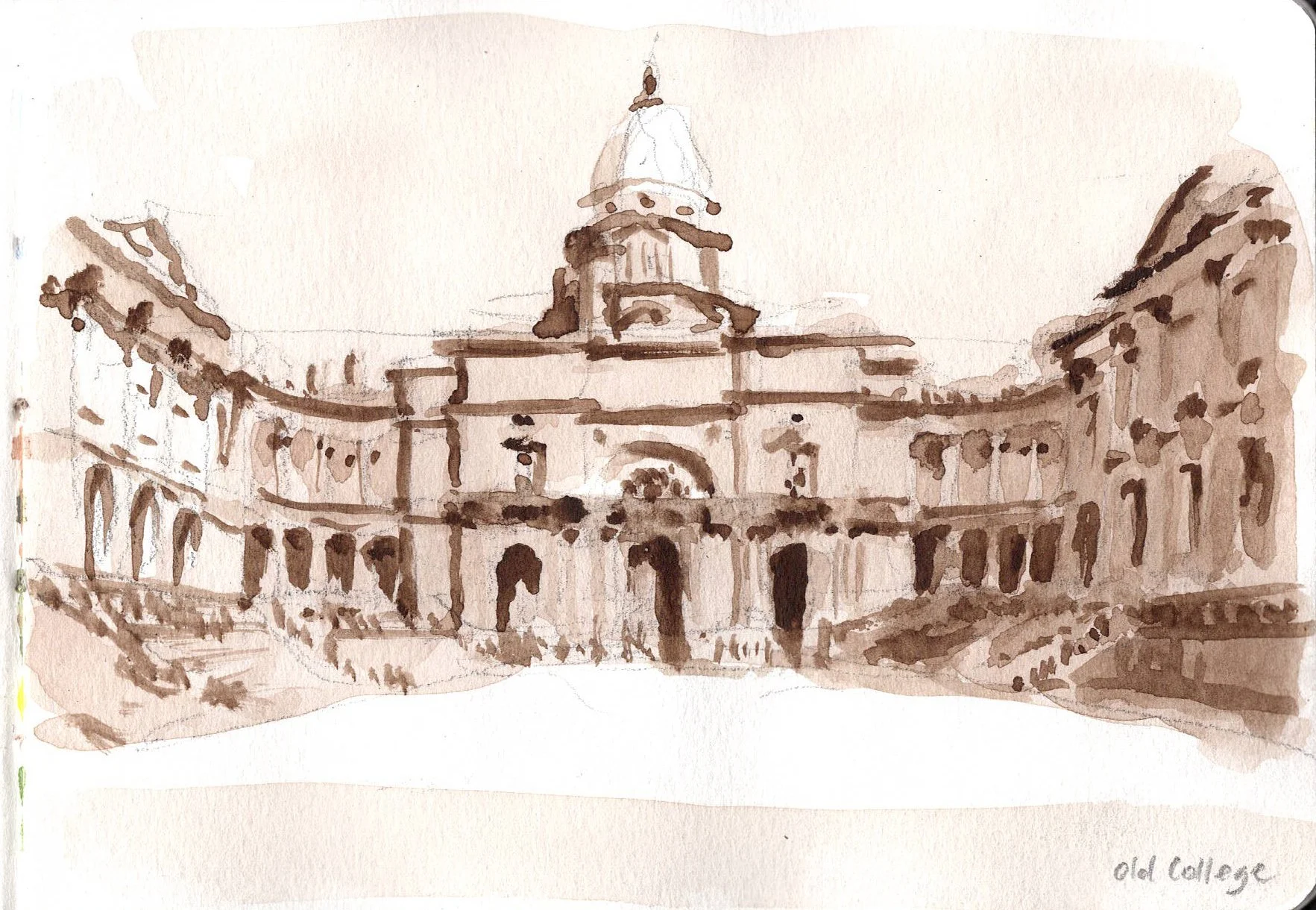
In the afternoon we walked across to Old Town to visit Old College, completed by Playfair after the initial phase of building designed by Robert Adam. It was a chilly afternoon in this stone clad courtyard, but this encouraged a quick, gestural sketch that became a foundation for a an impressionistic watercolor of this neoclassical facade.
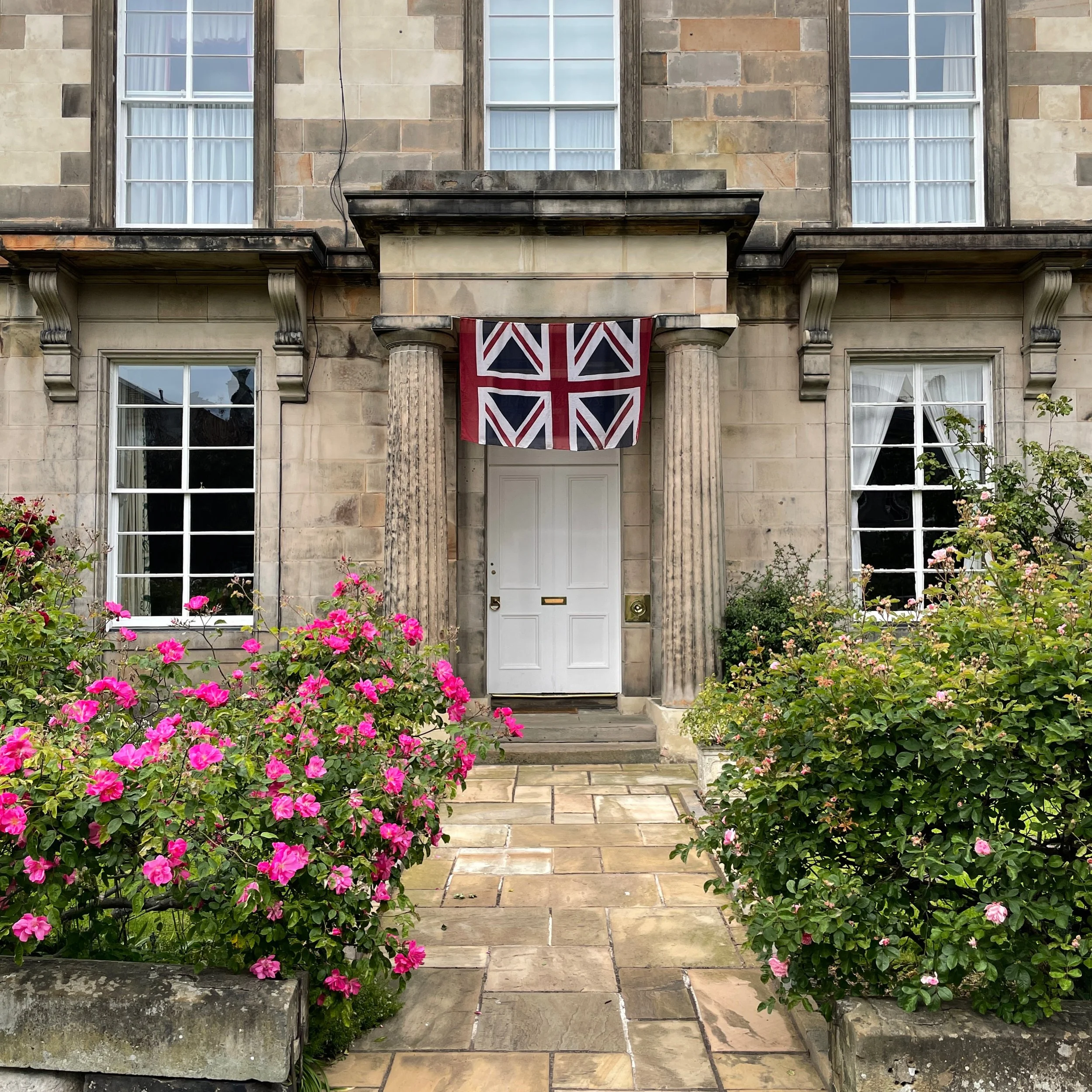
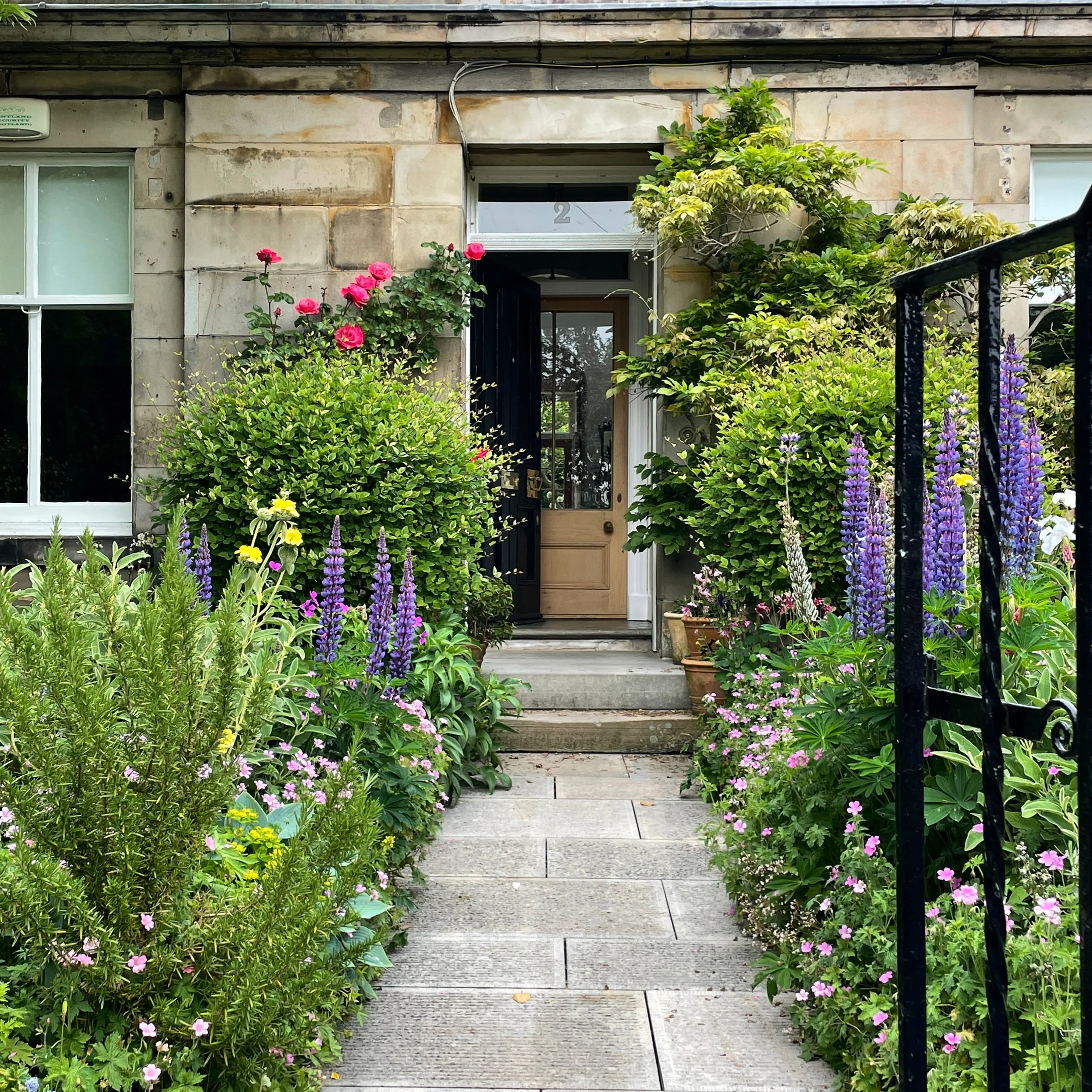
After our drawing sessions we toured Blackett Place, a charming neighborhood full of Greek Revival villas.
My stay at the Observatory House on Calton Hill allowed a private, after-hours experience of the grounds. Evenings were beautiful in the Edinburgh summer, and this watercolor sketch captured the bright colors blooming in the garden beneath the powerful monuments.
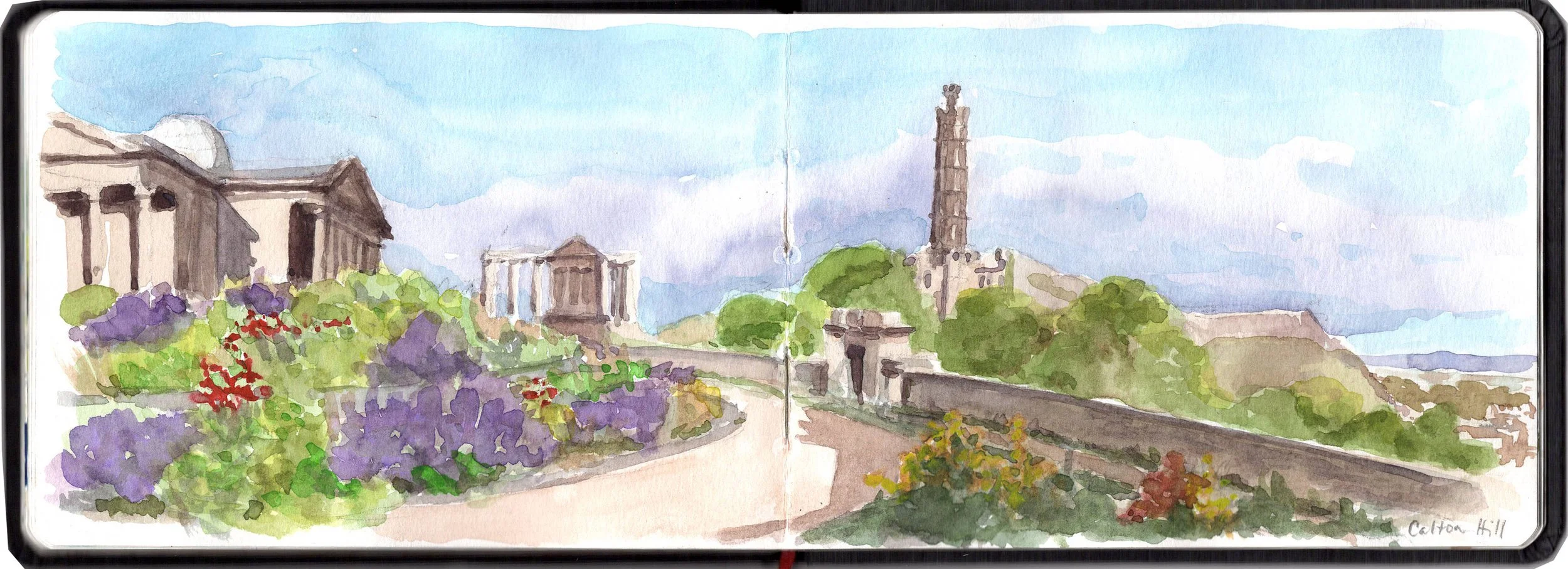
Calton Hill at Sunset, watercolor & pencil, 2022
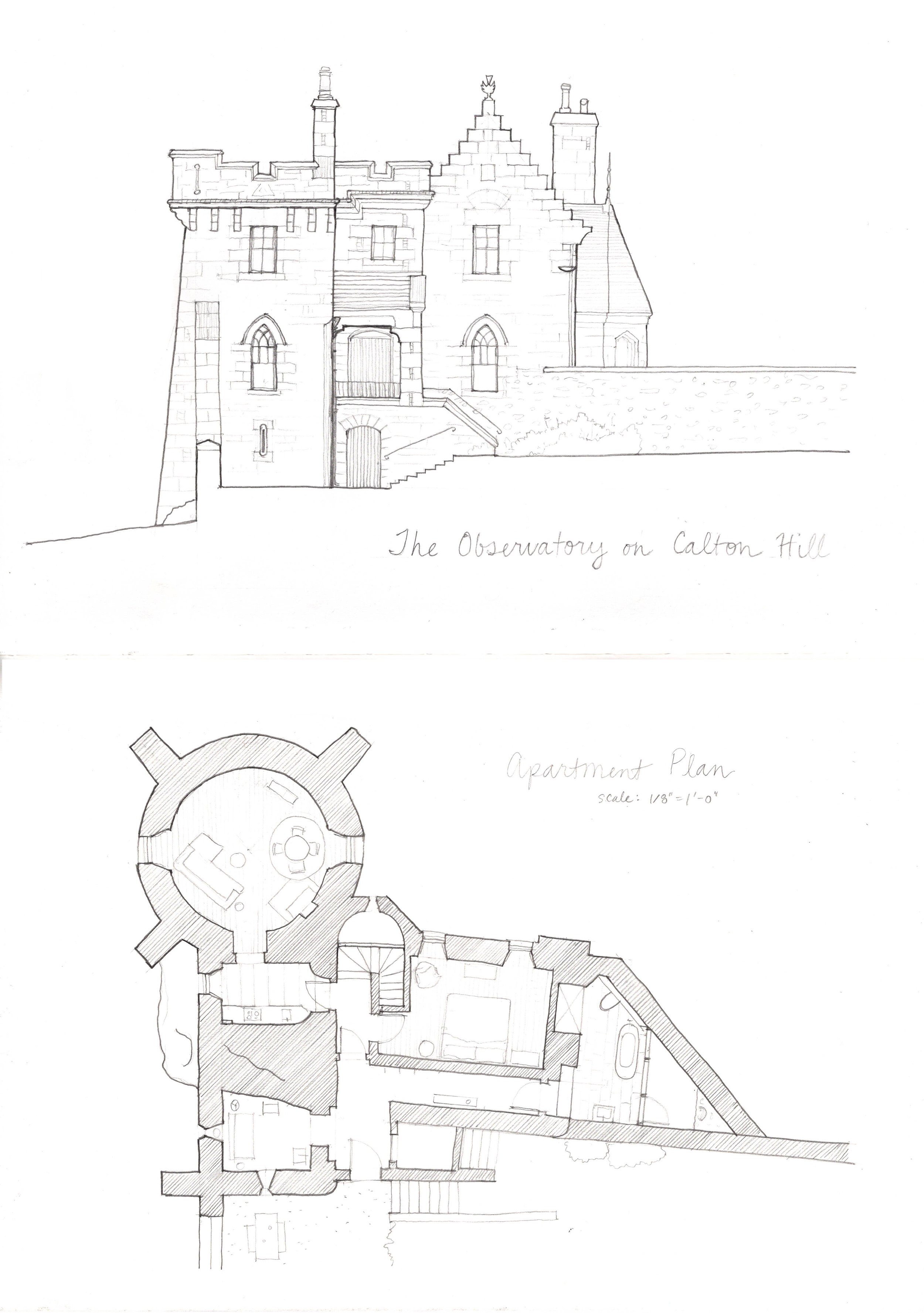
Measured Drawing of the Observatory House, Calton Hill, 2022
Day 4: Hollyrood Palace / Robert Burns Monument
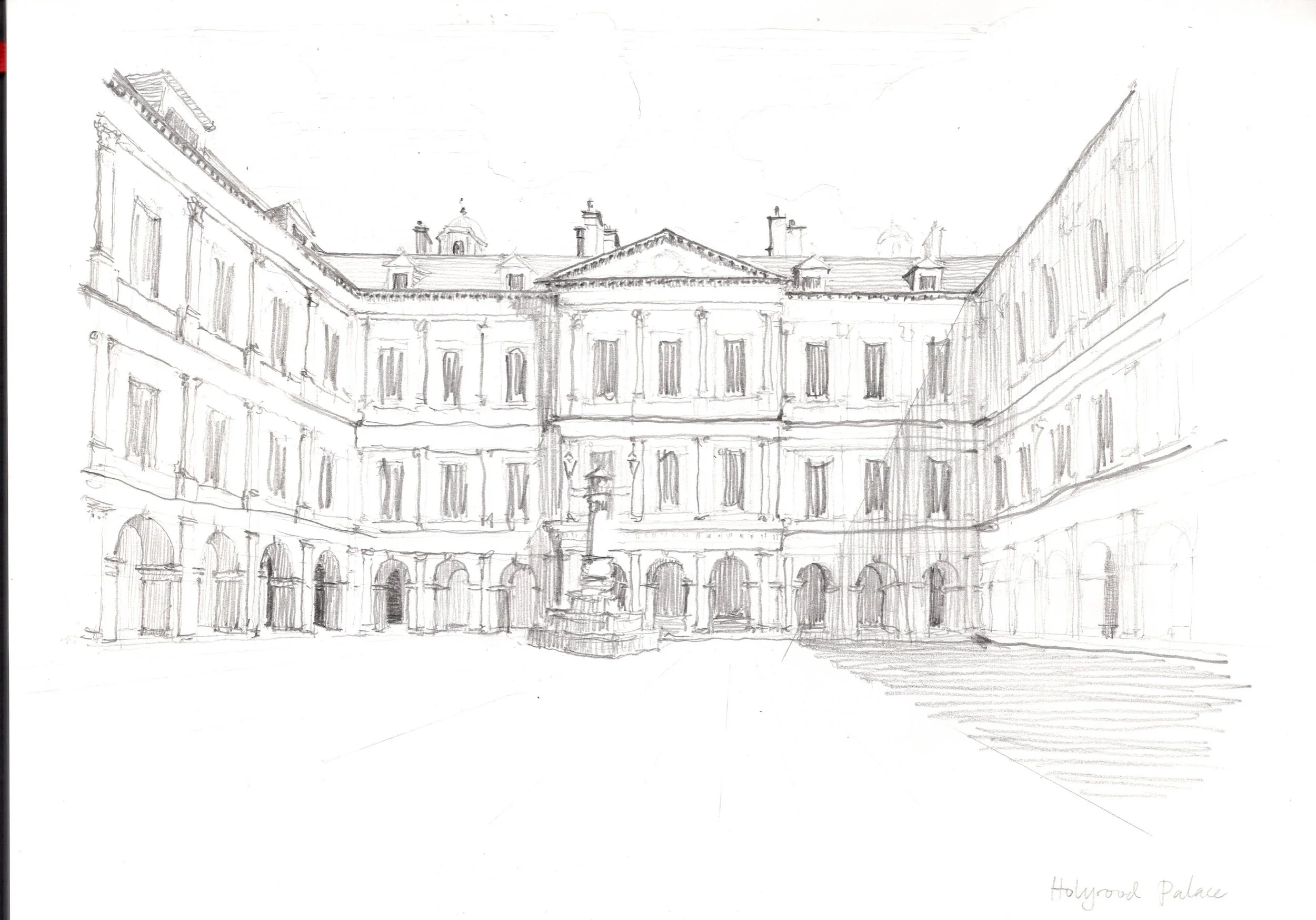
During a week of celebrations for the Queen’s Platinum Jubilee, we were fortunate to visit Edinburgh’s royal residence at Holyrood Palace. George gained special permission for us to draw in the courtyard of the Palace, one of the earliest classical works designed by Sir William Bruce in 1671-8.
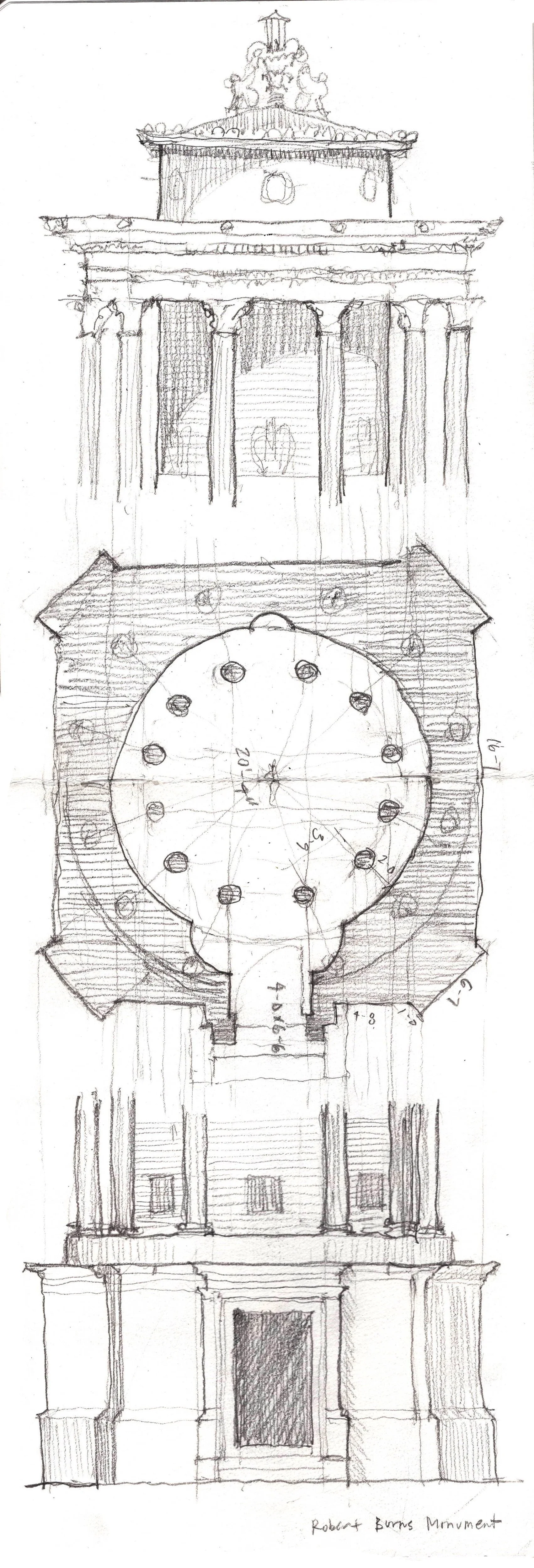
In the afternoon we revisited Calton Burial Ground to see the monument to Robert Burns designed by Thomas Hamilton. Based on the Choragic Monument of Lysicrates, the Burns Monument has an unusual interior built to house a statue of the poet which is now in the National Portrait Gallery.
We gained special permission to go inside which allowed us to take measurements of the circular interior space, columns, and door threshold.
Across the street from the Burns Monument is the Old High School, which drew my attention with its linear composition and grand pediment. I took advantage of the sunny afternoon to do a plein air watercolor sketch in my small sketchbook.
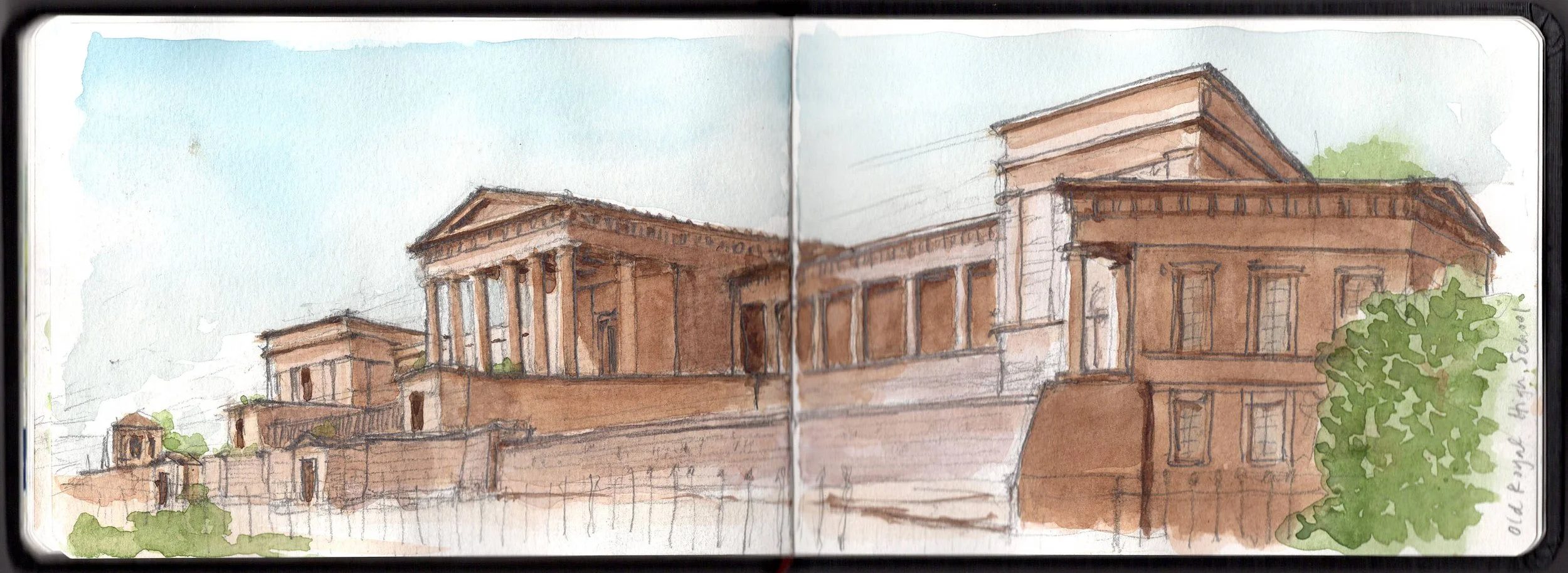
Old High School, Edinburgh, watercolor & pencil 2022
Day 6: National Gallery / Dean Gallery
Although the tour did not include any country houses or venturing outside the city during our week in Edinburgh, we did visit two buildings that resemble country houses in their scale and settings. The National Gallery of Modern Art, designed by the architect William Burn in 1822 and based on the Temple of Hephaestus in Athens, and the Dean Gallery, designed by Thomas Hamilton in 1831-3 and originally built as an orphanage.
We created a pair of plein air watercolor paintings using three colors: French Ultramarine, Burnt Sienna, and Yellow Ochre. Instructor Martin Burns led us through an example of blending these colors to create a palette suitable to Edinburgh’s stone buildings and landscape.
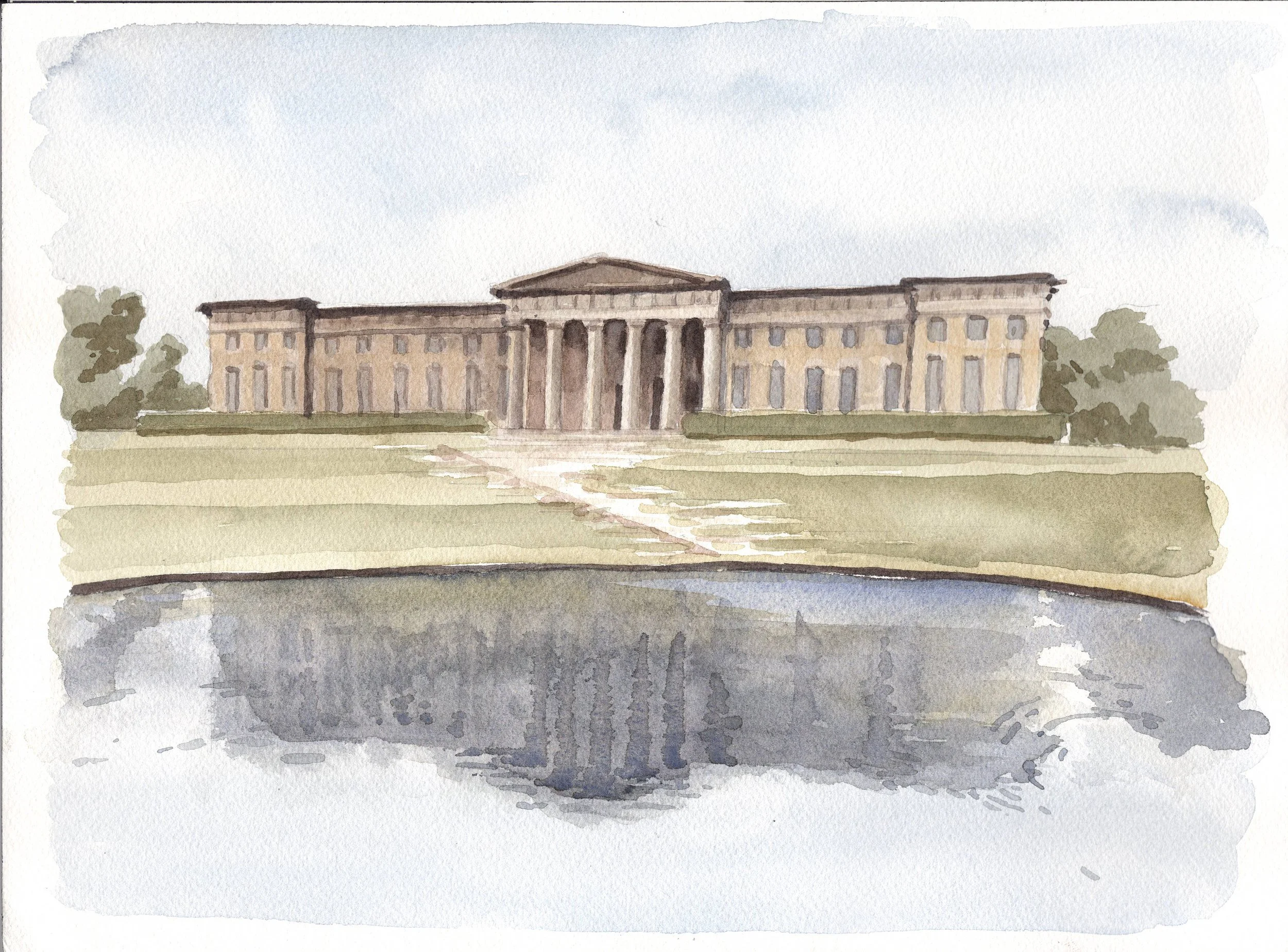
National Gallery of Modern Art, watercolor, 2022
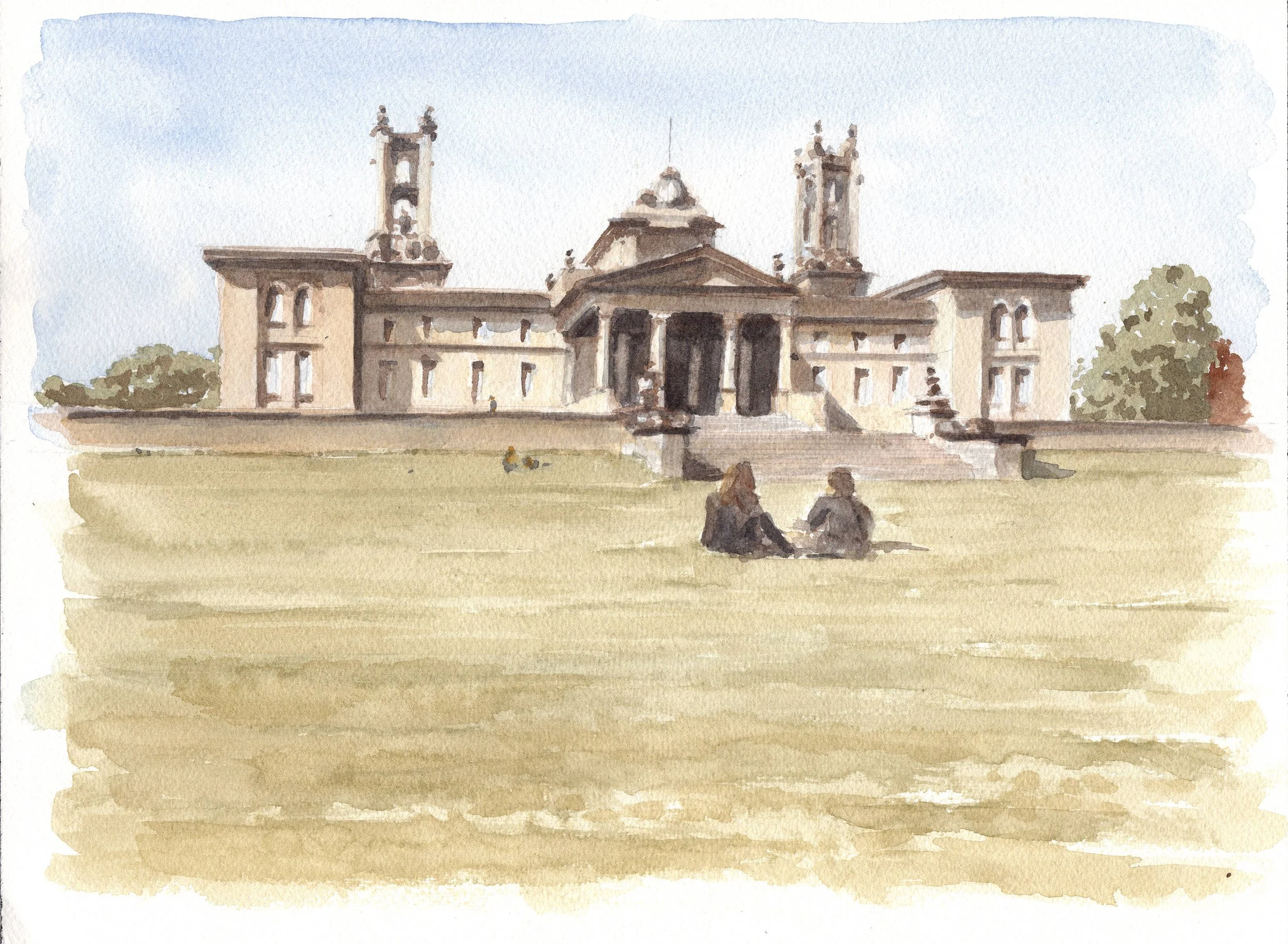
Dean Gallery, watercolor, 2022
Day 7: National Gallery / Stockbridge
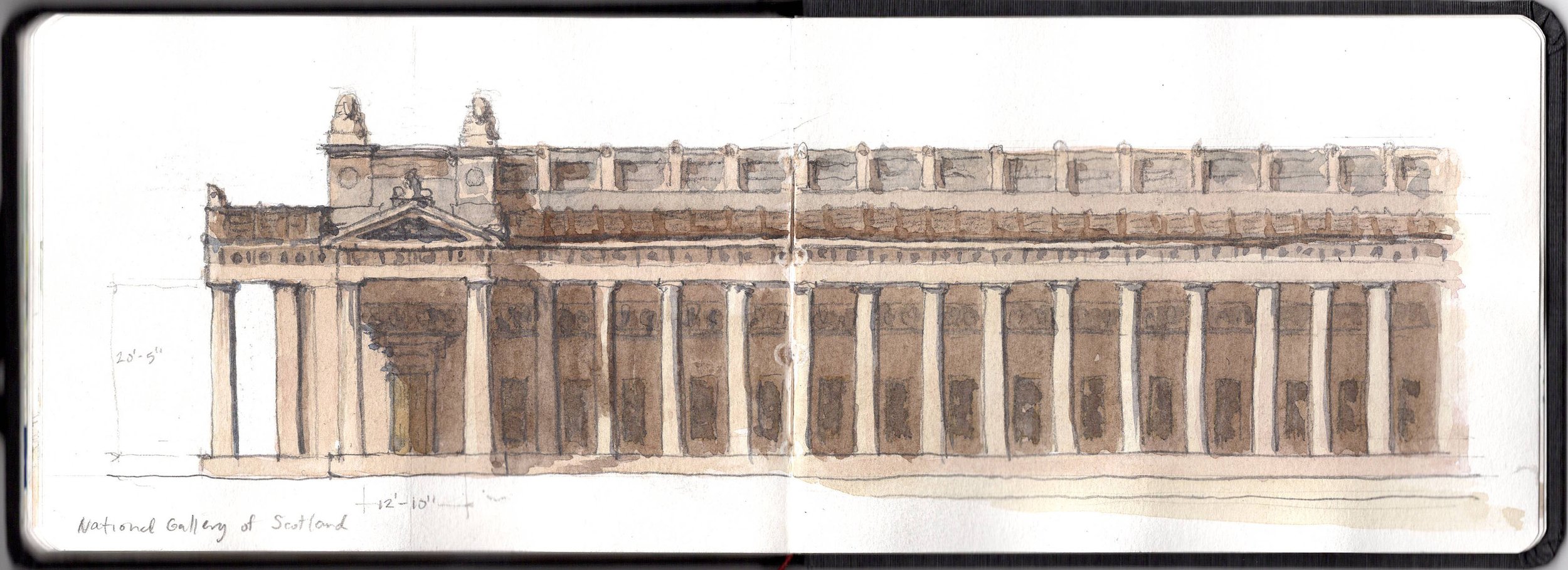
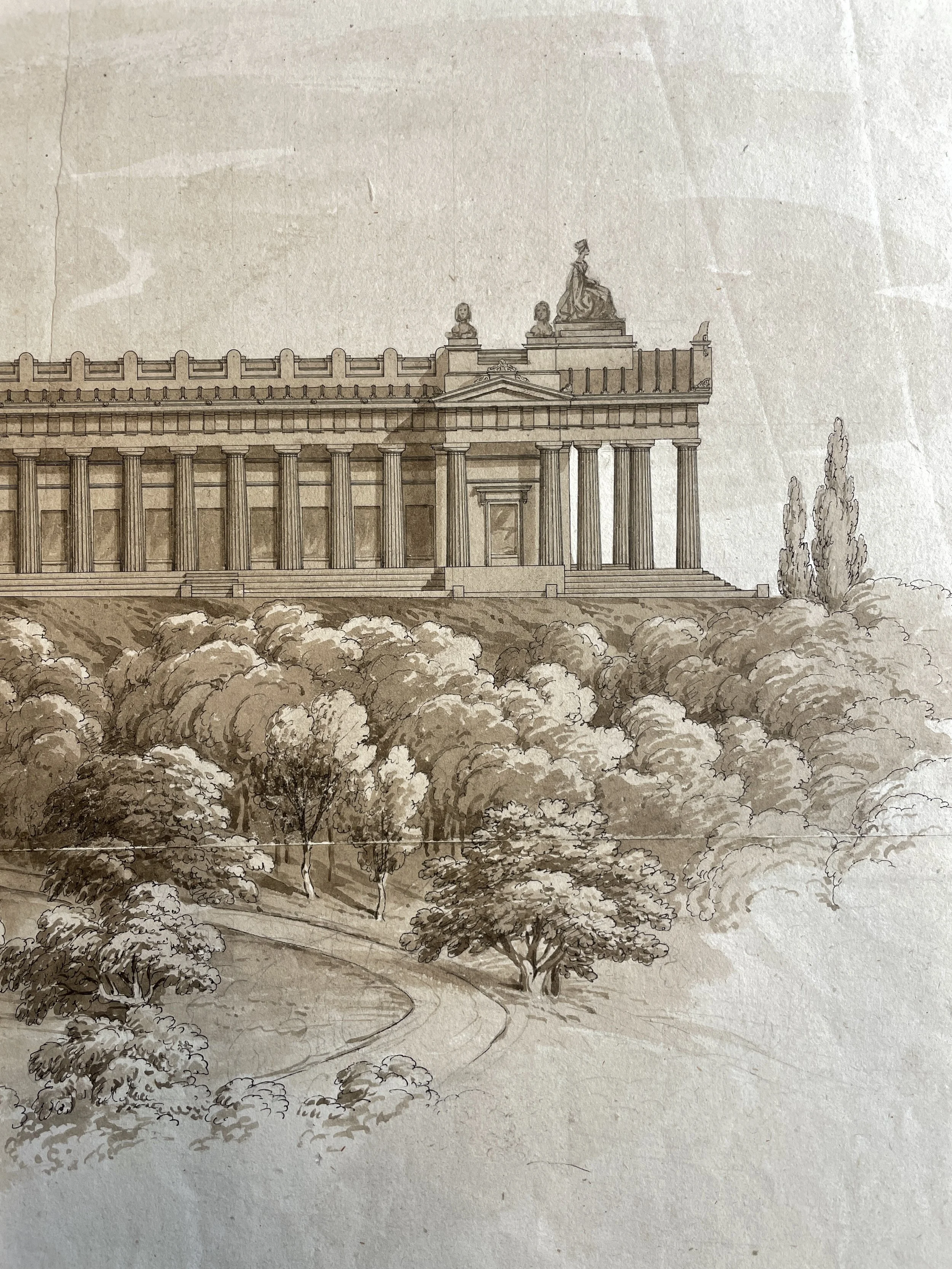
On the final day of our tour we made a ‘quick’ 90 minute watercolor sketch of the National Gallery of Scotland, Greek Revival buildings on The Mound, designed by William Playfair.
The experience recalled the detailed archival drawings made by William Playfair himself, which we were privileged to see under close observation at the University Library earlier in the week:
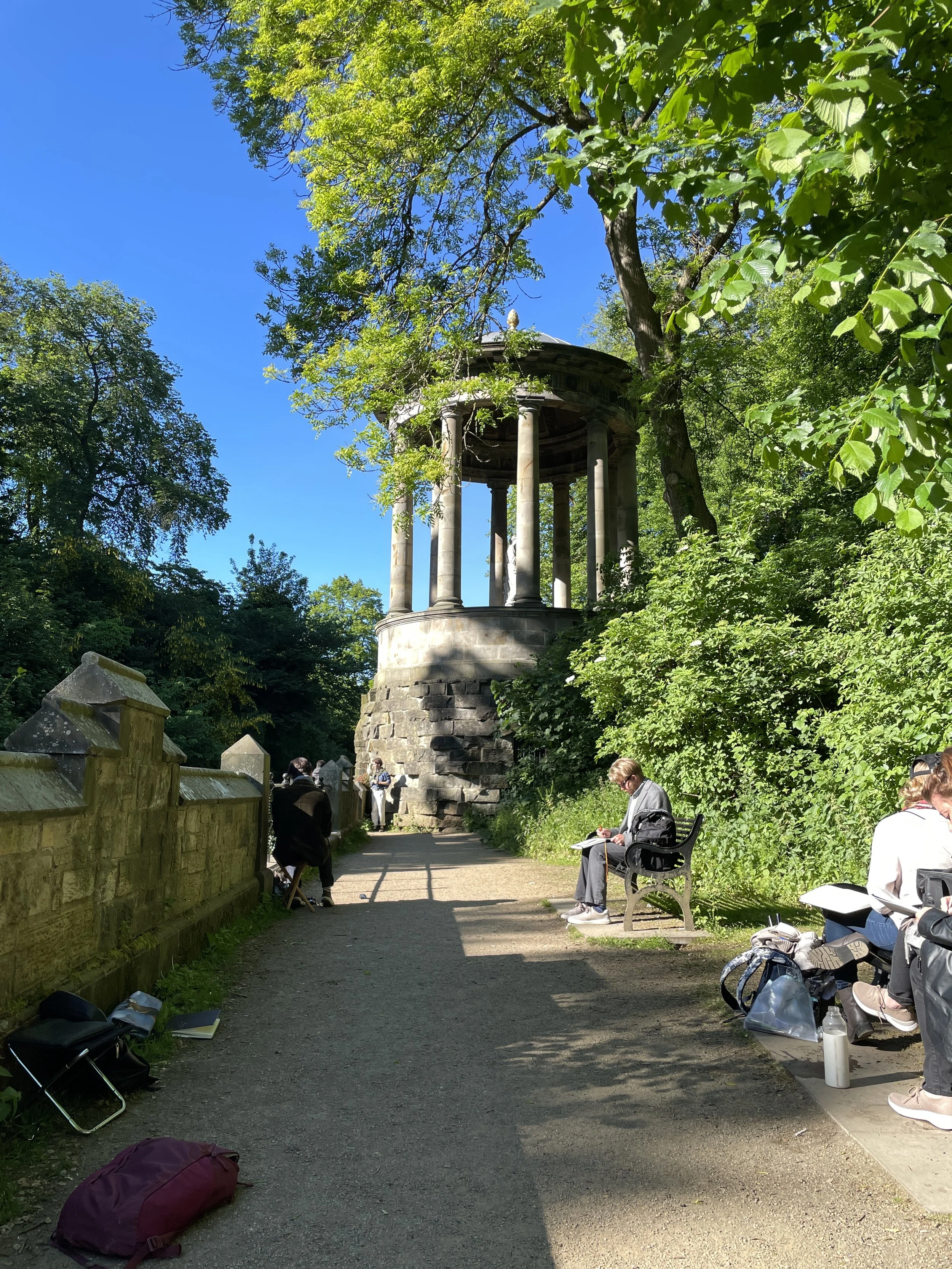
On our final afternoon together, we walked through Stockbridge to see St. Bernard’s Crescent with its impressive Greek Doric terraces, and on to St. Bernard’s Well. This is a charming Roman Dome circular temple by the side of the Water of Leith, which I drew in sanguine watercolor pencil.
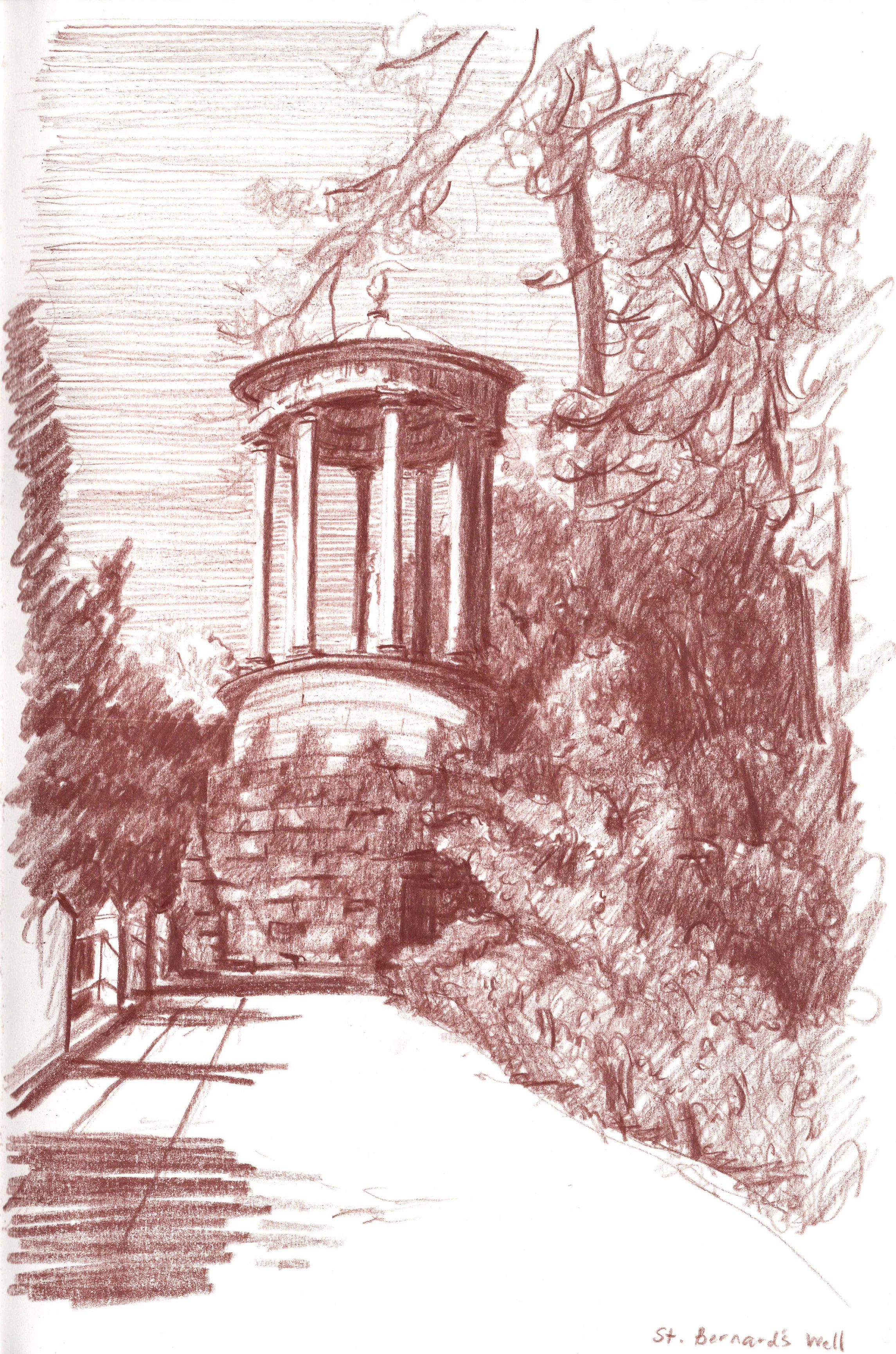
St Bernard’s Well, watercolor sanguine pencil, 2022
After hours during the tour, I found time for plein air watercolor. The sun didn’t go down until 10:30pm, so evenings were bright and the warmest part of the day. This watercolor captures Arthur’s Seat as seen from Calton Hill, with the Baltic sea in the distance.
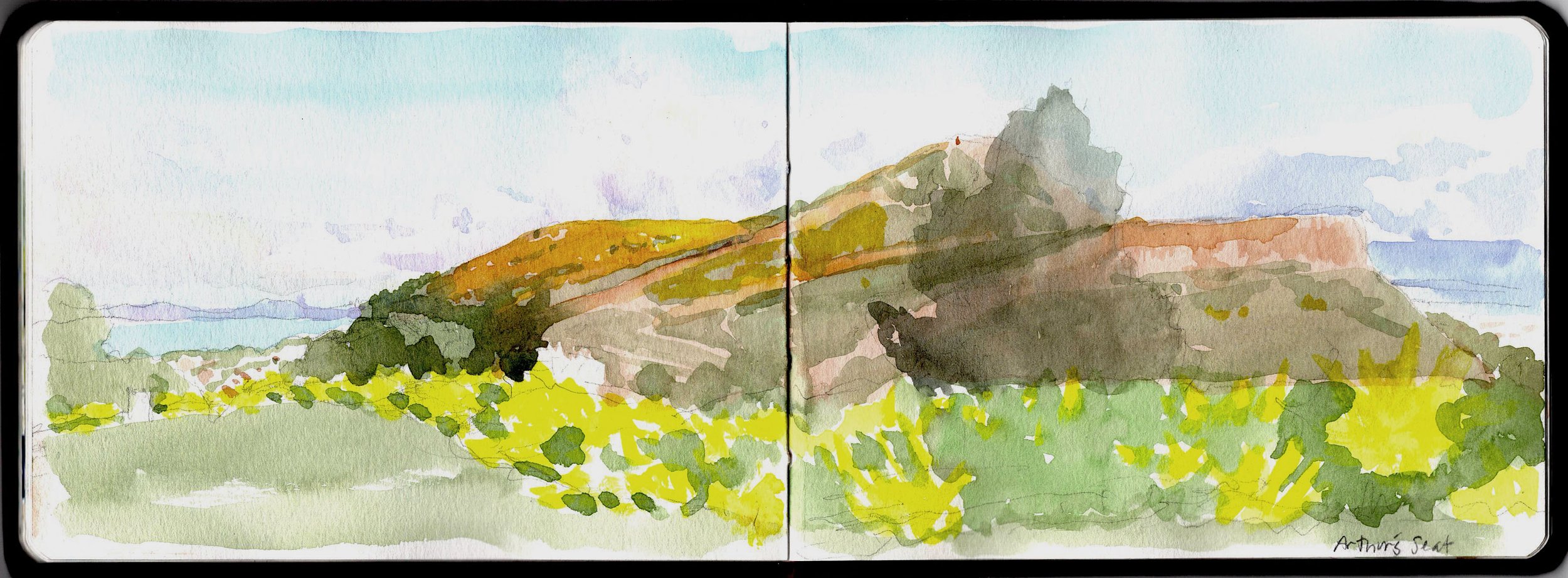
Arthur’s Seat, watercolor, 2022
Another opportunity to capture water with watercolor happened along the shore of Leith. I walked the beautiful pathways along the river’s edge toward the coast, which culminates in the port of Leith and urban canal system. I sat with a cappuccino and palmier from a local coffee shop and finished this watercolor.
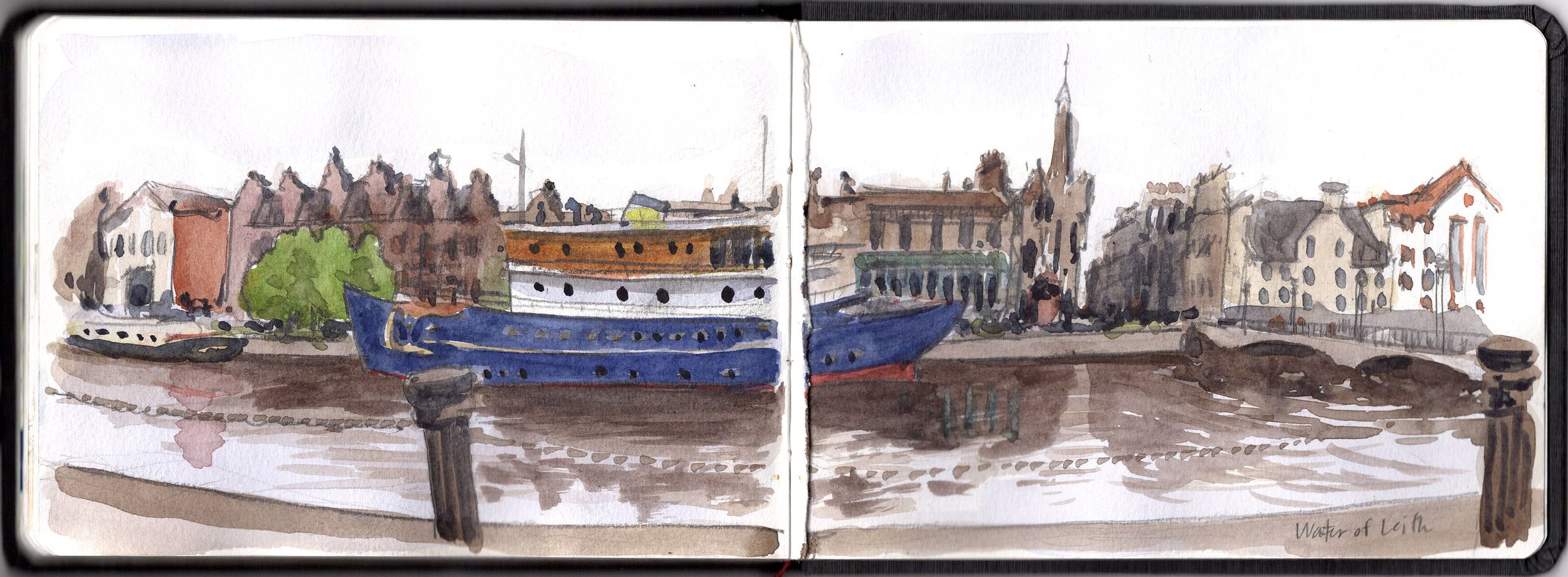
Shore of Leith, watercolor & pencil, 2022
Lastly, I traveled on my own to Melrose to experience the countryside, rolling hills and benefit from the fresh air. Melrose Abbey is an incredible ruin from Cistercian times, where exposed buttresses still support the towering walls of rose-colored stone. The strand of wheat preserved in my sketchbook is a sentimental reminder of Scotland’s stunning integration of nature and classical architecture.
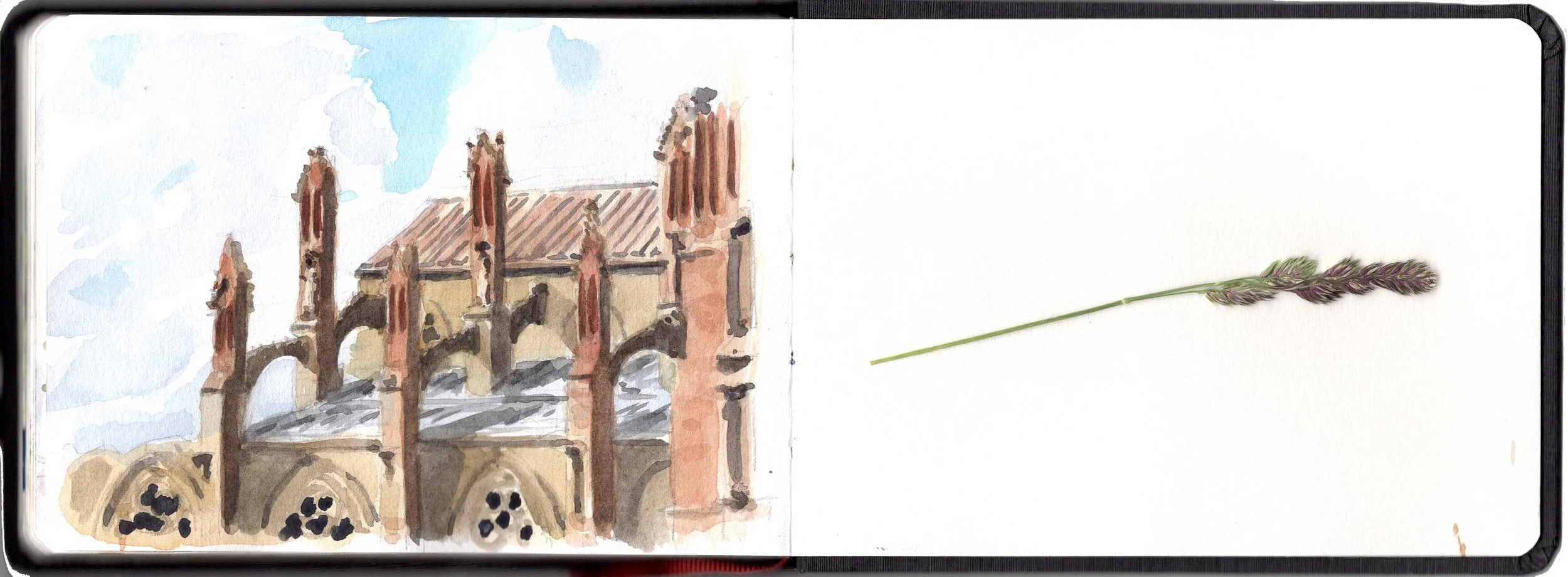
Melrose Abbey, watercolor, 2022